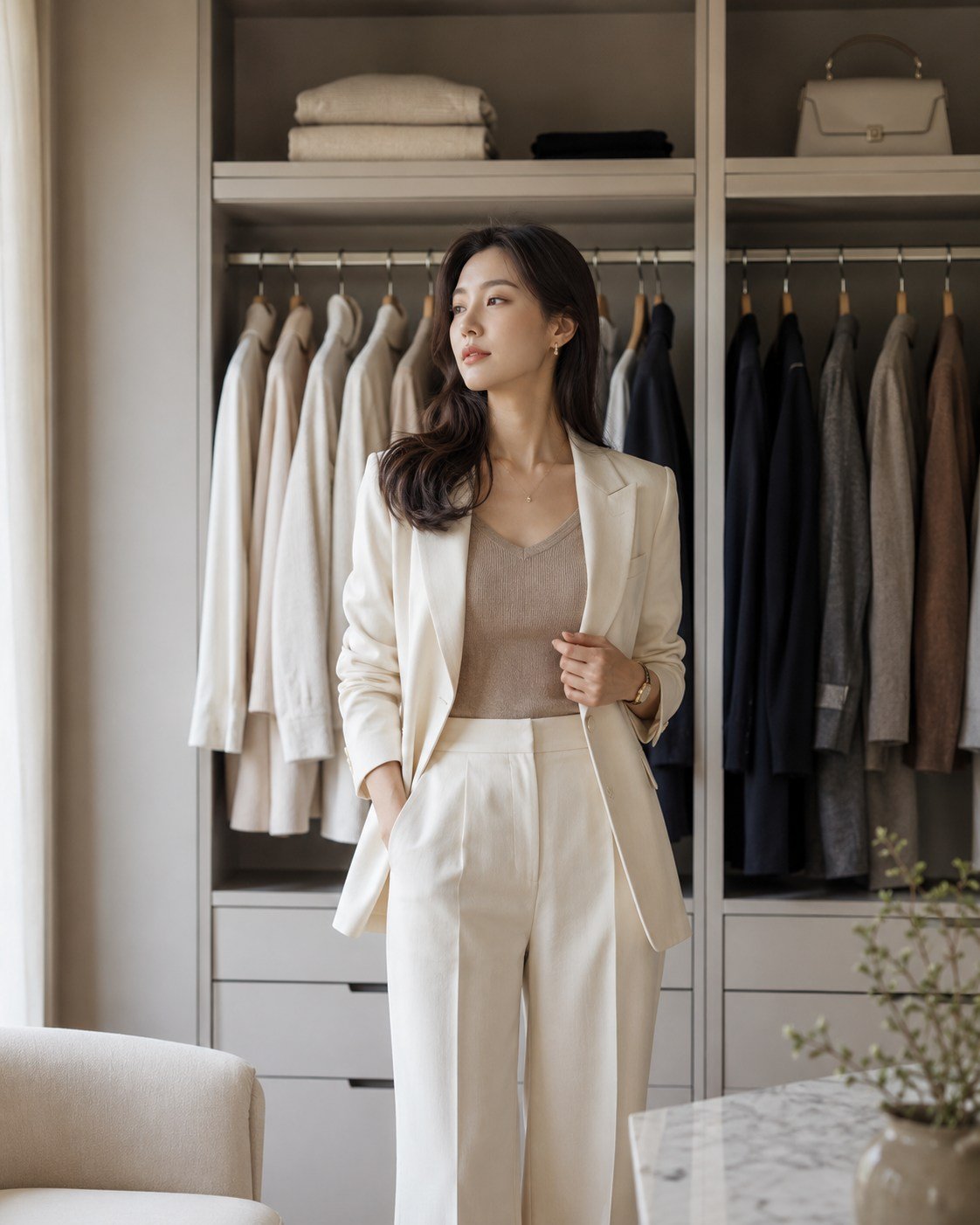
When choosing clothes, many people focus first on design. The shape of a jacket, the length of a dress, or the details of a blouse naturally catch the eye. Yet in many cases, color is what changes a person’s impression most quickly. The same shirt can look very different in ivory and crisp white. The same jacket can create an entirely different mood in black, navy, or beige.
A refined impression does not come from using many bold colors. It often begins with understanding which colors suit you and combining them with calm confidence. Color works like the background of an outfit and, at the same time, like lighting around the face. Some colors make the complexion appear clearer, while others can make the overall impression feel heavy or tired. This is why choosing color is not just a matter of taste. It is an essential part of personal style.
Base colors form the center of the wardrobe
To build an elegant wardrobe, it is helpful to begin with base colors. Ivory, beige, navy, gray, brown, and black are timeless, reliable shades. They are easy to combine, appropriate for many occasions, and not strongly affected by seasonal trends. If you want to create many outfits without buying too many clothes, understanding the power of base colors is essential.
Ivory creates a soft and clean impression. Beige feels warm and comfortable. Navy gives a sense of intelligence and composure, while gray creates a calm and polished mood. Brown adds depth and quiet elegance, and black brings a simple, urban sophistication. When these base colors become the foundation of your wardrobe, choosing what to wear each morning becomes much easier.
Colors close to the face require extra care
The most important colors are the ones placed near the face. Blouses, knit tops, scarves, and neckline details can directly affect how the complexion appears. A well-chosen color can make the skin look clearer and the expression softer. A color that does not suit you, however, may make the face look tired or the overall impression too severe.
Finding colors that suit you does not always require complicated analysis. A simple comparison in natural light can be very helpful. Place ivory and white, beige and gray, navy and black near your face and observe the difference. Which color makes your face look brighter? Which one makes your eyes look clearer? Which shade makes your overall impression feel more comfortable? Clothes are worn on the body, but the impression is completed around the face.
Calm colors do not have to feel plain
Some people worry that calm colors may look too simple. But refined style often comes not from strong color, but from depth of shade and quality of texture. Beige alone can include sand beige, camel beige, and greige, each creating a different atmosphere. Navy can feel formal and deep, while a softer blue navy can appear lighter and more relaxed.
When wearing calm colors, fabric matters. A gray wool jacket, an ivory silk blouse, a camel cashmere knit, or a beige linen shirt can look far more elegant because of the way color and texture work together. The quieter the color, the more clearly the quality of the material appears. This is why it is important to look not only at the color itself, but also at how it reflects light, moves with the body, and feels against the skin.
Accent colors become more elegant when used sparingly
A wardrobe built only on base colors can feel stable, but accent colors are useful when you want to add energy or a seasonal mood. However, the more accent colors you use, the weaker their effect becomes. If an entire outfit is filled with strong colors, the eye becomes distracted and the person may seem overwhelmed by the clothes.
Soft pink, deep green, burgundy, sky blue, olive, and camel are examples of accent colors that work well with neutral tones. An ivory knit and beige trousers can feel more refined with a burgundy scarf. A navy jacket paired with a sky-blue shirt can create a clean and intelligent mood. A black dress with gold jewelry and a camel bag can feel elegant without looking too cold.
Color sends a different message depending on the occasion
Color communicates differently depending on where you are going. For an important meeting or formal gathering, navy, gray, and ivory can create a trustworthy and composed impression. For a family gathering or relaxed lunch, beige, brown, and cream tones feel warmer and more natural. For travel, exhibitions, or cultural outings, adding seasonal color through a scarf, bag, or shoes can bring life to the look and photograph beautifully.
Wearing color well does not mean wearing the same shades all the time. It means understanding what kind of impression you want to create in each situation. The colors you choose on a day when you want to look composed may be different from the colors you choose on a day when you want to look relaxed or lively. Once this standard becomes clear, choosing an outfit becomes much easier.
A personal color palette makes shopping simpler
When organizing your wardrobe, it is helpful to create your own color palette. Even choosing three base colors, two supporting colors, and two accent colors can change the way you shop. For example, if your base colors are ivory, navy, and beige, your supporting colors are brown and gray, and your accent colors are burgundy and olive, the entire wardrobe begins to feel connected.
With a clear color standard, impulse purchases naturally decrease. Even if an item looks beautiful in a store, you may hesitate if it does not match the colors already in your wardrobe. On the other hand, if a color works well with what you already own, the item becomes much more useful. This is how you can buy less while wearing more.
A refined impression is not created by one perfect color. It is built through the harmony of base colors that suit you, accent colors that fit the occasion, and the right balance of fabric and fit. TAIST’s approach to color is simple. Rather than using strong colors to attract attention, choose colors that allow your own presence to appear more naturally and beautifully.
When the colors in your wardrobe become more organized, your style becomes more organized as well. Daily choices feel easier, and the overall impression becomes calmer and more polished. A good color does not simply make the outfit stand out. It brings out the atmosphere of the person wearing it. That is the beginning of elegant color styling.