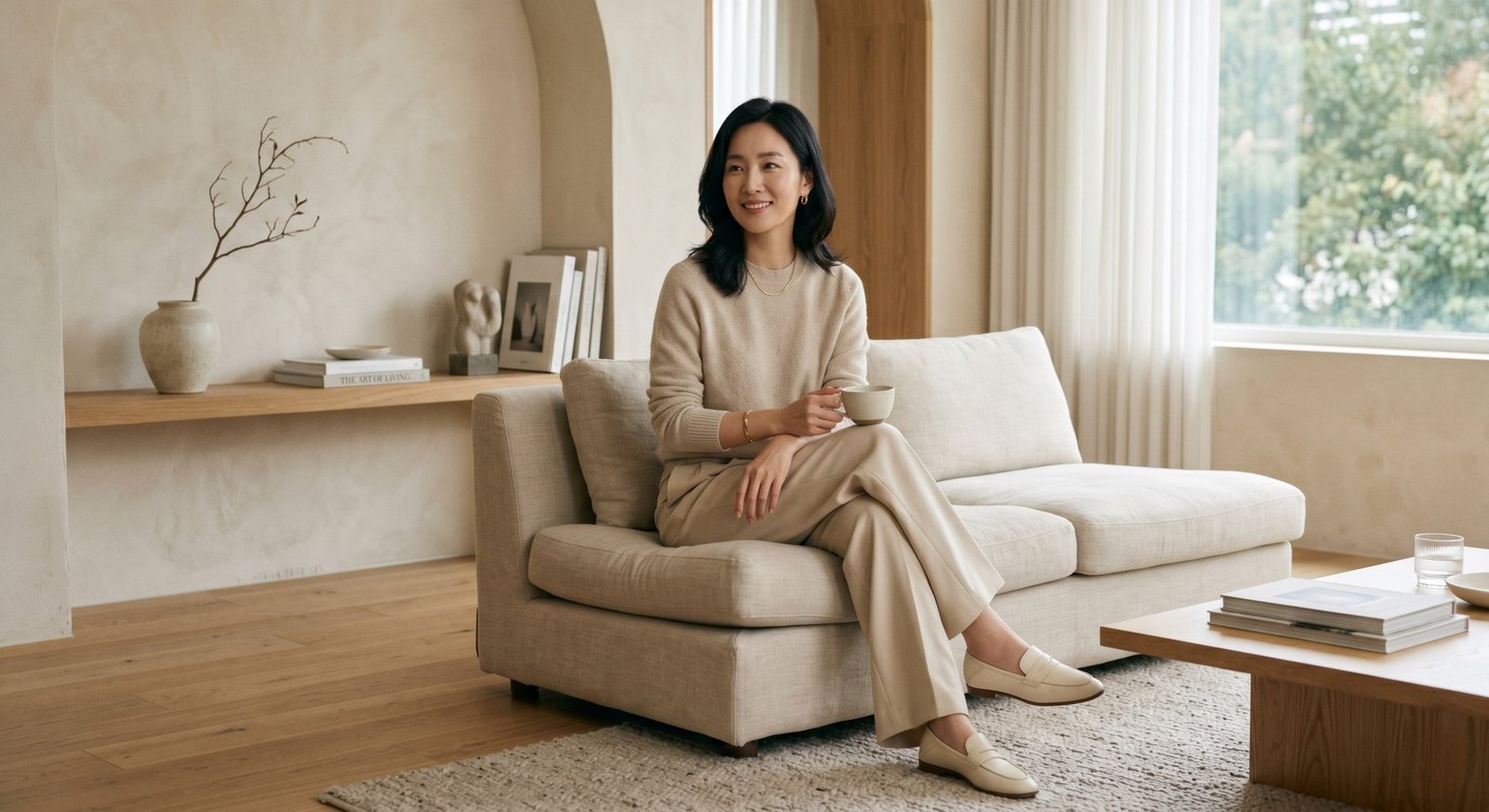
There are moments when your wardrobe is full, yet you still feel as if you have nothing to wear. Each season, you may buy new pieces, follow trends, and try different styles, but over time, many of those items remain untouched. True style does not come from the number of clothes you own. It comes from knowing what suits you, building a wardrobe around reliable pieces, and choosing items that continue to feel right over time.
Elegance is not the same as extravagance. A style that feels naturally composed often leaves a stronger impression than one that tries too hard to stand out. When clothes do not overpower the person wearing them, but quietly enhance her presence, style becomes memorable. At TAIST, good style is not about owning many expensive clothes. It is about developing the eye to make choices that feel refined, comfortable, and true to one’s life.
Essential pieces become the foundation of style
To build an elegant wardrobe, start by looking at your essential pieces. A crisp white shirt, a soft knit, well-fitted trousers, a tailored jacket, and a simple dress may not seem extraordinary at first glance. Yet these are the pieces you reach for most often, and they are the ones that remain useful season after season.
When choosing essentials, fit and fabric matter more than decoration. A shirt should sit naturally on the shoulders, feel comfortable around the neckline, and maintain its shape after washing. Trousers should balance the overall silhouette rather than force the body into an uncomfortable line. Knitwear should feel soft, fluid, and easy to wear. Once you understand these standards, it becomes possible to create many looks with fewer items.
A refined color palette creates a calmer impression
People who look polished without owning too many clothes usually have a clear sense of color. Beige, ivory, navy, black, gray, and brown are easy to combine and create a calm foundation for the wardrobe. Soft blue, muted pink, camel, or olive green can be added seasonally to bring warmth and freshness without overwhelming the look.
Reducing the number of colors in your wardrobe does not mean giving up individuality. On the contrary, when the overall tone is well organized, your complexion, accessories, bag, and shoes become more visible. The colors do not compete with one another, and the entire impression feels more balanced. For important gatherings or formal occasions, quiet colors often leave a more lasting impression than overly strong ones.
Good fabric creates quiet elegance
The quality of clothing often reveals itself up close. Two items may look similar in a photo, but once worn, the difference in fabric becomes clear. The way a material touches the skin, moves with the body, reflects light, and holds its shape can change the entire mood of an outfit.
Natural textures such as cotton, wool, silk, linen, and cashmere tend to create an elegant impression over time. Of course, every item in the wardrobe does not need to be expensive. But the pieces worn most often deserve more careful selection. Investing in a shirt, knit, trousers, or jacket that you wear regularly can significantly improve the satisfaction you feel from your wardrobe.
Fit is about balance, not changing the body
One of the most important elements of style is fit. Clothes with a good fit do not hide the body awkwardly or emphasize it excessively. The shoulder line, waist, sleeve length, trouser length, and neckline should all feel natural. When clothes fit well, posture looks better and movement appears more graceful.
Clothes that are too tight can reveal discomfort, while overly loose pieces may blur the overall impression. The key is not to reject one’s body shape, but to find balance. If the top is relaxed, the bottom can be more structured. If the trousers are wide, the top can be simpler and more refined. Even small alterations can make a meaningful difference. Adjusting the length of trousers alone can make the entire look appear more polished.
Accessories should be few, but intentional
In elegant styling, accessories should be chosen with precision rather than excess. A small pair of pearl earrings, a delicate gold necklace, a silk scarf, a well-made leather bag, or a simple watch can complete an outfit. Accessories should support the overall look, not take over the entire impression.
A scarf, in particular, is a useful item for creating variety with fewer clothes. A white shirt and trousers can feel complete with the addition of a silk scarf. By choosing the right fabric and color for the season, you can create a fresh look without constantly buying new clothing. Accessories are best chosen slowly, with attention to whether they suit your own atmosphere rather than a passing trend.
A wardrobe should be visible, not crowded
Good style begins with a well-organized wardrobe. When there are too many clothes, it becomes more difficult to decide what to wear. If you organize your wardrobe around the pieces you wear often, the pieces that fit well, and the pieces that make you feel comfortable, your daily choices become much easier.
Keeping clothes you rarely wear does not necessarily help your style. Rather than holding onto items you may wear someday, focus on what suits your life now. Place your most frequently worn pieces where they are easy to see, and store out-of-season items separately. When the flow of the wardrobe becomes simpler, it becomes clearer what you truly need. Impulse purchases decrease, and each new item is chosen more carefully.
Elegant style is connected to one’s way of living
Clothing is not only about appearance. It reflects how you choose, care for, and present yourself in everyday life. A neatly pressed shirt, clean shoes, a well-kept bag, and knitwear without pilling may seem like small details, but together they shape the whole impression.
Elegance is not created all at once. It is built through repeated daily choices. Does today’s outfit feel comfortable? Does it naturally express your presence? Will you still want to wear it after time has passed? These are the questions that shape personal style. The person who repeatedly makes thoughtful choices will eventually develop a style of her own.
At TAIST, the standard for style is simple. Buy less, choose better, and care for what you own. Rather than increasing the number of clothes in your wardrobe, begin by creating your own standards. That is where elegant style begins. Good style is not about imitating someone else. It is about expressing your life and taste in the most natural way.