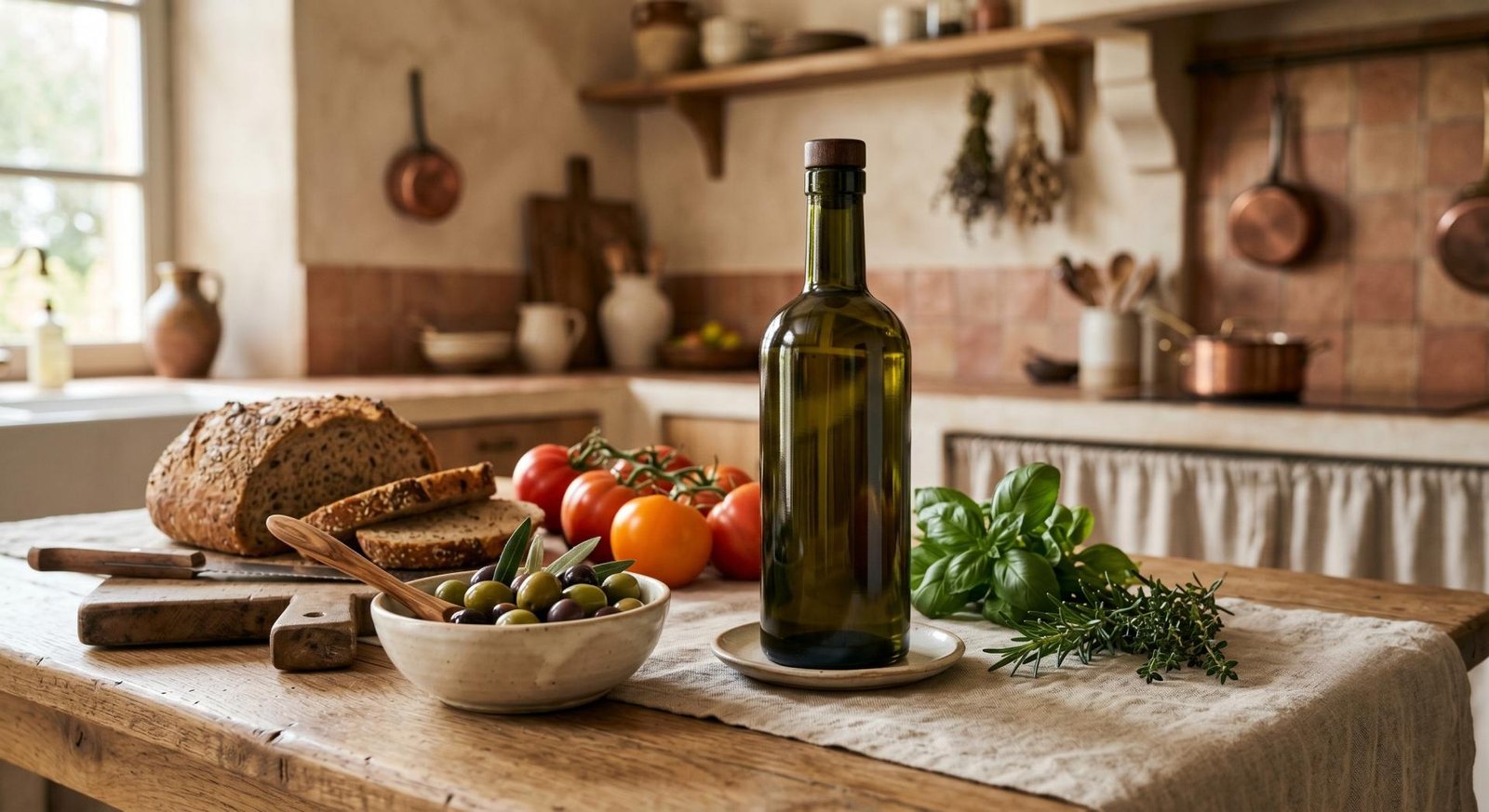
Olive oil is no longer a special ingredient reserved only for certain recipes. It has become a natural part of the everyday table. A simple drizzle over salad, a small dish for dipping bread, or a spoonful added to yogurt or roasted vegetables can change the entire mood of a meal. Yet when it comes to choosing a good olive oil, the information written on the bottle can feel unfamiliar. Terms such as extra virgin, acidity, olive variety, cold extraction, and harvest year appear often, but it is not always clear which ones matter most.
Choosing a good olive oil may seem difficult at first, but once you understand the basic standards, it becomes much easier. The important thing is not to rely only on a famous brand or elegant packaging. It is better to look at how the olives were grown, when they were harvested, how they were pressed, and how the oil was stored. At TAIST, the standard for premium olive oil is not showiness. It is freshness, integrity, and satisfaction at the table.
Begin by checking the extra virgin grade
The first thing to check when choosing olive oil is whether it is extra virgin. Extra virgin olive oil is made by extracting oil from olives through physical methods without chemical refining. It preserves the natural aroma and flavor of the olive fruit and is especially suitable for salads, bread, and simple dishes.
However, not every bottle labeled extra virgin has the same quality. Even within the same grade, freshness, origin, olive variety, and the producer’s management standards can make a significant difference in taste and aroma. The extra virgin label is a starting point, not the only standard. It is important to look at the next criteria as well.
Lower acidity often suggests better handling
Acidity is one of the most frequently mentioned standards in olive oil. It can be understood as one indicator of how fresh the olives were when harvested and how quickly they were pressed. In general, lower acidity suggests that the raw ingredients and production process may have been managed with greater care.
Still, acidity alone should not be the only basis for judgment. Even if the acidity is low, the oil may feel less satisfying if the aroma is weak or the storage condition has not been ideal. A well-made olive oil from a reliable producer usually shows balance not only in acidity, but also in aroma, flavor, texture, and finish. Acidity is important, but it should be understood as one part of a broader quality standard.
Look at the harvest season and production year
Olive oil is not a product that improves simply by being kept for a long time. Unlike wine, freshness is essential. This is why it is helpful to check the harvest season and production year when choosing a good olive oil. If possible, selecting oil from a recent harvest can help you enjoy a more vivid aroma and flavor at the table.
Premium olive oil depends greatly on what happens immediately after harvest. The olives should be pressed quickly, and exposure to light and oxygen should be minimized during storage. Checking whether the bottle clearly indicates the harvest year or expiration date can give you a sense of the producer’s care. Fresh olive oil often carries notes of green grass, fruit, gentle bitterness, and a light peppery finish.
Olive variety and origin create character
Olive oil changes in flavor and aroma depending on the olive variety. Picual, one of Spain’s well-known varieties, is often recognized for its distinct character and stable flavor profile. Arbequina tends to be softer and more delicate, while Hojiblanca can feel fresh and lively. Understanding olive varieties makes it easier to discover the style of oil you personally enjoy.
Origin also matters. Even within the same country, the climate, soil, and cultivation methods of each region can create different characteristics. Andalusia in Spain is one of the world’s major olive oil-producing regions, and Jaén is especially known for its vast olive groves and strong production base. Knowing where an olive oil comes from turns it from a simple ingredient into a story on the table.
Bottle color and storage method are also important
Good olive oil is sensitive to light, heat, and oxygen. For this reason, oil stored in a dark bottle is generally better protected than oil in a clear bottle. After opening, it is best to keep the bottle away from direct sunlight and store it in a cool, stable place. In the kitchen, a dark cupboard is usually better than a spot next to the stove or near a sunny window.
Once opened, olive oil should be used while it is still fresh rather than saved for too long. Olive oil becomes more valuable when it is used often, not when it is kept untouched for special occasions. The more premium the oil, the more naturally it should become part of everyday meals such as salads, bread, vegetables, and fish.
Taste and aroma are the most direct standards
A good olive oil often reveals itself first through aroma. You may notice fresh green notes, hints of tomato leaf, young fruit, or a soft nutty quality. On the palate, it may not be only rich and smooth. It can also have a gentle bitterness and a light peppery sensation at the back of the throat. These are natural characteristics often found in quality extra virgin olive oil.
At first, these flavors may feel stronger than expected. But once you become familiar with them, they can make food taste clearer and more vivid. Try olive oil with simple bread, fresh tomatoes, roasted vegetables, or fish. This allows the character of the oil to appear more clearly. Olive oil should not be judged only on its own. It is also important to consider how well it pairs with the foods you eat most often.
A good olive oil changes the standard of the table
Premium olive oil is not simply expensive oil. It reflects an attitude of choosing everyday ingredients more thoughtfully. One good bottle can change the flavor of a salad, make a piece of bread more satisfying, and add a Mediterranean sense of ease to an ordinary meal.
TAIST’s standard for choosing olive oil is clear. Check the extra virgin grade, look at acidity and freshness, understand the olive variety and origin, consider storage conditions, and pay attention to the balance of flavor and aroma. Once you know these standards, olive oil no longer feels like a difficult ingredient. It becomes an everyday choice that makes your table healthier and more beautiful.
A good table does not begin only with elaborate cooking. It begins with choosing one everyday ingredient with greater care. Selecting a bottle of olive oil may seem like a small decision, but it can change the atmosphere of the table and the feeling of daily life. A good olive oil is one of the easiest ways to connect a healthy table, refined taste, and an everyday wellness routine.